Showing posts with label Children. Show all posts

Saturday, February 24, 2024

What is Holding Your Child Back?


What is Holding Your Child Back?


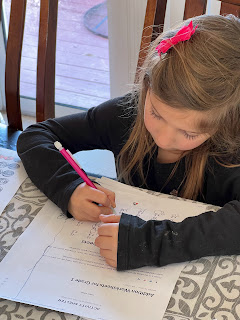
Last year, I wrote an article that talks about finding a system of education that works for one’s family, and the importance of identifying a student’s driving motivation, to help make the teaching process easier and also to help increase retention of material learned. Since there is evidence that a student learns better about subjects for which they have an interest, this is a practical strategy for making the education process easier for everyone.


Understanding a student’s struggles can be just as important as knowing what motivates them.


          There can be several different reasons why students may struggle to learn, even about things they should be interested in. It is important to address these as they are identified, and to try and mitigate them as much as possible, because they all feed into the amount of confidence a student has, and confident students perform better.


If your child struggles with learning, answering the following questions may help to isolate the problem so adjustments can be made.


Is the student getting enough sleep at night? More than that, are they getting restful sleep? It is possible that a child may be sleeping enough hours but not getting sleep that is making them wake up refreshed in the morning. If a child mouth breathes, moves a lot in their sleep, struggles with sleep apnea, or wakes constantly during the night, these things can be signs that they are likely not getting the sleep they need and it can lead to several issues involving focus, mood, regulation of emotion, and more.

For our children, we have done a variety of things to help improve sleep, including palate expanders (to open airway and make room for adult teeth); chiropractic care (helps improve nervous system function so signals can travel through the body with ease); limit screen time- especially before bed, magnesium supplementation in the form of Epsom salt baths or body butter on their feet (I make an all-natural magnesium body butter that works very well for inducing sleep in wired children and adults and it can be found here), limit sugar and caffeine (good health practices for total body wellness), and occasionally a relaxing tea, such as chamomile or lavender, or a homeopathic remedy like calcarea carbonica if their minds just won’t slow down.

Does the student have a different learning style than the one being used to teach them? Some students learn by seeing things, hearing things, or by participating in activities or moving. A student who learns best by seeing things will struggle to internalize information if it is only told to them. A student who learns by actively doing will not learn as well if they see it on paper or even in a video demonstration. Most students benefit greatly from hands-on, immersive environments because they utilize all of their different learning faculties in these settings and can come away with something regardless of their learning strengths. This is why we try to teach in a hands-on way whenever possible, whether it is through baking, talking about money management, good business practices, etc. There is usually a bigger picture- and end goal- and the smaller subjects are treated as a means-to-an-end, rather than an end in themselves. Understanding the context where something would be used can help greatly with retention.

This applies to children who are so-called dyslexic, or ADHD, as well. They may not do well with education in the conventional sense, but they have their own strengths that are amazing to witness when those strengths are recognized and utilized to their fullest potential. This not only reduces frustration, but also increases confidence for the student, and is especially important if the student has historically struggled to do things “they way everyone else does.”

Is my child afraid to fail? This can be a very difficult trait to identify because it can manifest in different ways- it can look like lack of interest, protesting when asked to perform, refusing to try, etc. Ultimately, it is a form of anxiety for the perfectionist child- the one who wants to be good at things but is reluctant to try for fear they may not be good enough. For our student who struggles with this, Arsenicum Album has proven to be very helpful to help overcome that anxiety so she’s more willing to try. We also make it a practice to remind our kids that we all learn through trying, and practice makes us better. No one is a master of anything the first time, and we also want our kids to see us trying things we aren’t good at so they feel like they can be bad at things, too. Our children watch us very closely, and our actions speak volumes, so it is essential that our actions match the words we are saying to our kids, even if it is a blow to our pride at times. I DON’T want my kids to think I know how to do everything; I want them to see me trying to learn new things and get better at the times I’m not very good at. Because, I want them to be brave enough to do those things, too.


You can find more information about these subjects and more in my book: The Science of Homeschooling


*Note: None of the information here should be taken as medical advice, it is intended as ideas for parents to research on their own in managing their children’s unique situations

** Contains Affiliate Links


Thursday, January 4, 2024

Cultivating Tomorrow's Leaders: Tips for Empowering Your Child's Potential


Image via Pexels

Cultivating Tomorrow's Leaders: Tips for Empowering Your Child's Potential

Guest post by: Douglas Summers

As a parent, you have the unique chance to mold future leaders by fostering leadership qualities in your children early on. Your guiding influence lays the groundwork for their future success. Embark on this empowering journey to shape the leaders of tomorrow with these tips from Kristy Crandall.

Harnessing Education for Leadership Development

Your journey as a parent and a leader intertwines when you lead by example. Consider enhancing your own education, like pursuing an online master's degree in nursing. This move not only advances your career in nurse education, informatics, nurse administration, or advanced practice nursing but also serves as a practical demonstration of leadership for your children. Balancing parenting and online learning showcases resilience and dedication, essential traits of a leader. Find out how to get the most out of this experience by integrating your academic pursuits with daily family life, thereby setting a powerful example for your children to emulate.

The Blueprint of Young Leaders

You can encourage your children to embrace the practice of setting achievable goals. This simple yet profound strategy teaches them to strategize, prioritize, and monitor their progress. Introducing them to goal-setting nurtures a sense of purpose and direction, essential elements in the makeup of a leader. Teach them to break down large goals into smaller, manageable tasks to promote a sense of achievement. Encourage them to reflect on their accomplishments and learn from setbacks. This process of goal setting and achievement builds resilience and self-confidence.

Cultivating Collaborative Spirits

Teach your children the value of cooperation by involving them in group activities or team sports. These experiences emphasize the importance of working harmoniously with others, a critical trait for effective leadership. Learning to navigate the dynamics of teamwork at a young age prepares them for collaborative environments in their future endeavors. Encourage them to understand different viewpoints and value diverse contributions. Help them develop conflict resolution skills, an essential part of teamwork.

Cornerstones of Leadership

Guide your children in understanding and accepting responsibility for their actions. Demonstrate how integrity and trustworthiness are non-negotiable qualities of a good leader. Holding them accountable for their commitments and decisions instills a strong sense of ethical conduct and reliability. Teach them to make apologies and amends when necessary, showing that everyone makes mistakes, but what matters is how one addresses them. Discuss the consequences of actions, both good and bad, to deepen their understanding of responsibility. Praise them when they show responsibility, reinforcing positive behavior.

Leadership Confidence

Encourage your children to explore and make decisions independently. Such autonomy fosters personal growth, self-reliance, and the confidence to face challenges. This independence is crucial in developing the resilience and adaptability required in a leader. Provide them with opportunities to choose their own activities or solve problems on their own. Support their choices and guide them without taking over. Celebrate their successes and discuss the learning points in their failures.

Decision-Making Skills

Help your children hone their critical thinking and decision-making skills. Encourage them to analyze situations, consider the pros and cons, and make informed choices. Nurturing independent thinking is vital in shaping effective leaders who can navigate complex situations with ease. Teach them to ask questions and seek information before making decisions. Introduce them to basic problem-solving techniques. Discuss real-world scenarios with them, asking for their opinions and reasoning. Encourage them to understand that not all decisions are straightforward and that some require careful thought and patience.

As a parent, you play a pivotal role in fostering leadership qualities in your children. By setting the right examples, encouraging goal-setting, teaching the value of teamwork, instilling a sense of responsibility, promoting independence, and nurturing decision-making skills, you are effectively laying the groundwork for your children to become the leaders of tomorrow. Your efforts today are an investment in their future and the future of our world.


Saturday, June 10, 2023

Finding a System that Works for Your Family

Not all schedules are created equal

        I have always found schedules to be a bit of a challenge. On one hand, structure and routine is helpful for setting expectations and creating a natural rhythm during the day. On the other hand, life is unpredictable (especially with children), so there needs to be a certain amount of flexibility or a schedule can add to the frustration and stress instead of taking it away. So, while creating a schedule for your own family, it is important to account for the patterns that already occur naturally within your home, as well as the things that motivate the people affected by the schedule. By taking these details into account, it can make implementation much easier, and can set you up for a better chance of long term success.

Prioritize Practical Motivators

        In our home, we are intentional about trying to keep expectations in the home as true to life as possible. Our children are expected to contribute in age-appropriate ways to the upkeep of our home. We do not give allowance for chores, but emphasize the importance of working together as a family to keep our space clean, so no one is required to do everything on their own. (We do occasionally surprise them with small payment or other reward if they go above and beyond or take initiative to do extra on their own.) 
        Even our youngest children "help" with chores, which usually takes longer in the short run, but as their ability and confidence increase they are able to do the jobs more and more independently. Yesterday, I was feeling exceptionally tired, so after returning from taking them to their various activities I said, "I am going to take a nap. Work on these four tasks together, and when they're done you can play games or watch a movie until I wake up." My 11, 7, 6, and 4 year-old sprang into action and finished their chores together in 30 minutes, and were quietly doing their various activities when I got up. Time doing activities that they want to do has proved to be a powerful and effective motivator for them, and it helps to teach them the importance of time management.

Flexible Structure


        This is the schedule I created for my oldest son a couple of months ago, and it has worked well for him. He is very motivated by time to do the things he wants to do. I told him that the 9-12 timeframe is for only school-related activities. If he gets his assigned work done early then he is allowed to choose his own assignments for the rest of the time period. He reads faster than me, so this happens quite often and he watches a documentary, practices Free CAD, watches youtube videos on C++, or chooses some other "assignment" for himself that he has to get approved before starting. He loves being able to choose what he learns about, and if he has that to look forward to he doesn't usually need much nagging to get his work done. The 3-5 time slot is for outside play (if the weather is nice) or for finishing school that he didn't get done earlier. So, if he was dragging his feet in the morning, he loses some of his time outside in the afternoon (which he hates). Its a simple formula, but one that emphasizes time management and the natural consequences of procrastination.

Children love to have some control over their education

        It is also a good, practical way to teach responsible decision-making. Children can make choices within parameters set for them, and are often happy to do so. They are really just small humans who want to feel like they have some control over their own destiny (though they would probably not identify it as such). Each child is different, so the parameters that are set must take the individual child into account, but even simple things like allowing them to choose the order they do their subjects in can motivate them to do more focused work. 
        As part of a space camp my son was a part of this past week, he got to participate in a simulation of a Mars mission with a "real" shuttle and workstation. He played the weather officer, and had to closely monitor changes on the surface of Mars so they could "land" safely. It was a completely immersive experience, and the first time he had been in a high stress situation of that kind. He said he identified an asteroid that would be hitting the planet near where they were supposed to land, and they had only a few minutes to decide what course of action was needed to avoid a crash. When I asked him how he felt about being in a high-stress situation like that he said, "I liked the feeling that people were depending on me to help make the mission a success."

I encourage you to give your children opportunities to show you what they're capable of.


Thursday, March 23, 2023

Everyday Learning


            Human beings, and especially children, learn every day. We know this, and yet it is easy to forget that most of the learning that is done does not involve textbooks. As human beings, we learn who we can depend on, who is a reliable source of information, who can dependably get a job done quickly, how a person will react to unexpected information, and what a person’s priorities are. We learn who we can trust and who we can’t. Children are the same way.

            In the life of a child, the people they are biologically wired to look to for value are their parents. It can be exhausting trying to field the endless barrage of questions, requests, and demands. Sometimes, we just need a break, and that’s ok. But, it is also important to be mindful of the message that we are giving to our children every time we lose patience or tell them too busy for them.

Every interaction we have with our children leaves an impression. Every time they interrupt a project we are working on they are asking, “Am I more important than the thing you are doing right now?” When work routinely takes precedent over the felt needs of the child, they learn that they are not as important as their parents’ career, money, status, or whatever else they hear their parents talk about.

Obviously, work is important and essential for the wellbeing of the family, but often times it can be overdone, or children can feel like it is the higher priority because their parents are distracted while at home. In situations where there simply isn’t time to give a child the attention they crave, whether because of disability, financial hardship, a single parent household, etc., communication is an important tool to help overcome any feelings of insignificance. Without putting all the weight of the burdens of life on the child, simply being acknowledged and included in some kind of discourse about the family situation can help their sense of worth tremendously.

Something like, “I know I haven’t had a lot of time to spend with you lately, and I’m really sorry. It isn’t that I don’t want to, but there are some things going on right now that mean I have to work these extra hours, so we can continue to do _____. I hope that the situation will change soon so we can spend more time together. And, I hope you know that I love you, and I always want to be here for you if you need me.”

When parents are not around- when a child is in school- they take cues about their worth from the people they interact with most- from teachers, peers, and faculty. Some of these interactions can be positive, and many of them are often negative. All of the thoughts and emotions are placed into a scale, and it balances out based on the child’s personality and the amount of “weight” they assign to each interaction.

Over time, children begin to associate emotions with the various people in their lives. They will be less likely to go to people who are emotionally unavailable or overly critical to help them with their emotional needs. People who take an active interest in the child and are emotionally available are more likely to have lasting and vibrant relationships with the child as they grow up.

Let this be an encouragement to you to slow down in your day-to-day life. Children like to be involved in “real life” things, too, so slow down and let them learn alongside you. Memories don’t have to be made with expensive excursions to exotic places. Some of the best memories are made doing ordinary life together.

Saturday, April 2, 2022

Real-World, Experiential Learning


“The history of education shows that up to 50 years ago, education was principally geared towards getting a job. That’s no longer the case, it seems. If we could agree the purpose of education…, then we can agree the curriculum to fulfill that purpose. Everything else follows. And there may be more than one purpose and there may be more than one curriculum. One size doesn’t fit all. (Schoolsmith, 2019)

Children should know more than how to fill in bubble answers when they leave school. They should be confident in their abilities to think and reason, and be able to adapt to whatever environment they’re put into. They should be able to speak with respect and a deeply held belief that they have something valuable to say. Children should be able to step into the real world and say, “I’ve seen this before, and I know what to do; this time, I’m just doing it on my own.”

That is a hard goal to attain when children spend forty or more hours a week sitting in a classroom, surrounded by the same people and the same predictable environment. In a survey of 165,000 high school students, “An overwhelming number of students, 87 percent, want to eventually earn a college degree and land a career. But many believe that their schools aren’t helping them develop the skills they’ll need to succeed after graduation.”

In the grand scheme of things, “school age” represents a very small part of peoples’ lives. It is also the period in which their brains are developing and growing to survive in the world they are living in. It does not make sense for them to spend a significant amount of time in a classroom setting for thirteen to twenty years, in a stagnant and predictable environment, only to be thrown out into the chaos of a world that demands improvisation and a plethora of skills that are never taught in school. Is it any wonder that they feel lost when they are suddenly expected to integrate into the world as good and productive citizens? Students who are forced to drop out to help take care of their families understand, better than most, that there is a disconnect between what most schools offer and what they need to succeed, or even just to survive, in their real-life situations.

Academic learning is important, but it needs to have evident real-life applications. Children- especially young children- thrive when they are able to learn things that are “real” and relevant. They love to help out with what they see adults doing, because that’s how they learn to become a part of the same world.

Learning is the holistic process of adaptation. Learning is not just the result of cognition but involves the integrated functioning of the total person- thinking, feeling, perceiving, and behaving. It encompasses other specialized models of adaptation from the scientific method to problem solving, decision making, and creativity.”.

Teaching children is much like planting a garden. If you are planting a garden, most people know that it is not enough to simply scatter seeds and water them incessantly. Plants need much more than just water. They grow best if they are planted at the proper time of year, they need room to grow, proper soil that is well-drained, nutrient rich, and the proper pH; plants need the proper amount of sunlight, good air flow, protection from extreme elements, and they need time.

However, planting a garden is more complicated than that. Because, different plants have different individual needs; some plants grow well next to each other, and others inhibit each other’s growth. So, it’s beneficial to strategically plant to allow for optimal growth.

Even if all of these considerations are accounted for with complete precision, plants will grow at different rates. Even multiple plants of the same variety will not grow exactly the same. But, eventually, if their needs are met, all plants should grow strong and hearty- the best version of themselves they can be.

By contrast, if seeds are scattered without much forethought or prep work, they will not grow as well. If the new seedlings are watered incessantly to get them to grow, some will grow, but many will drown. It is easy for the plants to become waterlogged, and many will rot or become diseased. Without good sunlight, plants will become “leggy”- tall and weak; without good airflow they will develop mildew or other fungus; without balanced nutrients, leaves will yellow or growth will be stunted- some will do well, but most will struggle to grow, and almost none will reach their full potential. Water is essential for growth, but too much water, or not enough of other essentials, makes it almost impossible for plants to grow well.

In the same way, academics are important. But, focusing exclusively on academics for the first thirteen, or more, years of life means that children’s development becomes very lopsided, and they are ill-equipped to “withstand the elements” when they arise. It used to be, that academics were secondary to the needs of the family and learning the family trade. For many years, school was a luxury that only the wealthiest families were able to provide for their children. It is a huge blessing that virtually every child now is able to be educated; however, we seem to have reached the other end of the pendulum, where children are well-versed in the things they are taught in school, but they don’t have experience or knowledge of much else. Instead of having a family trade to fall back on, children now are stuck living at home, because they go through school and then feel ill-equipped to do anything once their school tenure is done.

School was never intended to replace home learning, but was meant to be an addition to it, to enhance individuals’ abilities to thrive and provide for their families. Reading, writing, and math make it possible for people to gain knowledge independently, communicate ideas, and engage in fair business transactions. These skills are essential. They are important skills for success in business and in life. But, on their own they leave much to be desired, because there is no context in which to use them.

Until there is practical application for even these basic skills, they are just abstract ideas that possesses very little real-world significance. Perhaps that it what is missing most from the modern approach to education- people used to understand the need for these basic skills so there was a desire to learn them. Today, many people seem to have lost sight of the context and practical application for these skills, so there is very little perceived value in knowing how to do them. Children who are more involved in real-world activities better understand the importance of these skills and have a greater appreciation for school.

Wednesday, March 23, 2022

Intangible Currency and a Simplified Life


When did it become virtuous to work oneself to death? Why has overcommitting and under sleeping come to mean we're "doing it right?" I'm guilty of the same thing- of finding ways to stay busy without any real intentionality. And, its exhausting. And frustrating. Because, the more we push ourselves, the more we struggle to do our tasks well. The more we succeed by the world's standards- throwing more and more balls in the air- the more we feel like we're failing, as our nearly perfect performance becomes more and more flawed with each new commitment. For Christians who are also trying to "be still" as the Bible tells us to, it's another reminder of all the things we are failing to do well. 

I've wrestled with this a lot. Because, the world measures worth in money, achievements, and busyness. In the absence of one, it makes sense that one would need to double up on another. As a stay at home mom with no significant financial contribution, aside from what I save us in would-be childcare, fast food costs, and skincare expenses, I've tried to increase my "value" in other ways. 

I have come to understand that everything is limited- time, strength, mental and physical energy- like a kind of intangible currency we spend to achieve the things we prioritize. When we spend it in one place it reduces the amount we have to use in another, and if we come up short we have to compensate by pulling from other areas. Overexerting in one area often means taking from another for a less than perfect end result. If we're mentally overworked, the task we're attempting often takes longer; if we feel exceptionally stressed in any area we often become irritable and short-tempered. It is discouraging to feel like you're completely spent and still came up short. But, how many of us feel like this every. Single. Day? Is it any wonder that some people give up trying?

This has been one of my hard-learned lessons over the past several years- that "be still" is not another task to accomplish, but permission to pause and breathe. What is it that we are really trying to accomplish? What tasks are causing more stress than they're worth? A question that I ask a lot when it comes to homeschooling my kids is, "what is necessary and beneficial for learning, and what is busywork that can be skipped?" 

One of the reasons, I think, people get overwhelmed by the idea of homeschooling, is because school has become such a big, complex, amorphic monster. Like so many other things in our lives, education has become a construct of rules and rubrics- a check-the-boxes-to-make-sure-nothing-is-missed deity that is a necessary evil people tolerate because they have to. I think it is time to re-evaluate this perception. All of the books and computer programs, worksheets, and teaching aids are great, but they should be tools we use, not the immovable, apathetic dictator they often become. 

What do children absolutely need to know to succeed in life? Academically, they need to know how to read and write and do math. For a long time, those were the only things that were taught in school- everything else was taught at home, learning the family trade and how to keep a home. Do you know those things well enough to teach them with the help of aids? If no, are you able to find someone who can? Suddenly, the big scary monster is a manageable size, and you are free to fill in other lessons and activities that are of interest or you feel are important. This is just one example of practical simplification, and how it gives us the freedom to enjoy our work. 

"Be still" does not mean we are meant to be idle- there are many passages in the Bible that talk about the importance of work. But, I do think it means slowing down and being intentional; clearing our minds enough that we are able to be present and engaged- with those around us and with God. Perhaps that is one of the greatest gifts children give us- engaging with and teaching them necessitates that we slow down and act intentionally. When we try to get them to move at our pace there is frustration and resentment, maybe even anger; but, if we can slow down and help them at their pace without feeling the pressure to accomplish quickly, in the end we are able to accomplish so much more with minimal discord. 

And, isn't this what Jesus taught when he was on earth? More tasks, rules, and rituals does not make a person "better." Rather, it's important to focus on what really matters. In his case it was to focus on him as the only means of salvation, but the concept applies to other areas of life, also. When we understand what matters we are able to be more efficient in the work we do, and ultimately we can accomplish more with our sanity intact. 

And so, I encourage you to be still, even in your work; to be intentional, and strip your work down to what really matters. In the end, that's the most satisfying part anyway- knowing you did something that mattered, and you did it well. 

Friday, March 18, 2022

The Academic Case for Homeschooling


“…Last, but not least, every child wants to know. There they are, those desires, ready to act on occasion and our business is to make due use of this natural provision for the work of education. We do make use of the desires, not wisely, but too well. We run our schools upon emulation, the desire of every child to be first; and not the ablest, but the most pushing, comes to the front. We quicken emulation by the common desire to get and to have, that is, by the impulse of avarice. So we offer prizes, exhibitions, scholarships, every incentive that can be proposed. We cause him to work for our approbation, we play upon his vanity, and the boy does more than he can. What is the harm, we say, when all those springs of action are in the child already? The athlete is beginning to discover that he suffers elsewhere from the undue development of any set of muscles; and the boy whose ambition, or emulation, has been unduly stimulated becomes a flaccid person. But there is a worse evil. We all want knowledge just as much as we want bread. We know it is possible to cure the latter appetite by giving more stimulating food; and the worst of using other spurs to learning is that a natural love of knowledge which should carry us through eager school-days, and give a spice of adventure to the duller days of mature life, is effectually choked; and boys and girls ‘cram to pass but not to know; they do pass but they don’t know.’ The divine curiosity which should have been an equipment for life hardly survives early schooldays.” (Mason, 2017)

Charlotte Mason was a teacher in England the early 1900s. Although she taught thousands of children, in her later years she began teaching parents and caregivers on how children learn and thrive best. She stressed the importance of giving children exposure to a wide variety of ideas and experiences, and giving them the freedom to interpret the information for themselves. She believed in encouraging curiosity, and guiding self-motivated learning for the sake of understanding, rather than force-feeding information that was disconnected from the world the children lived in. She believed that all children had the capacity to learn in this way- in a society where poor children learned a trade rather than receiving a formal education- regardless of their social or economic “advantage,” because all children are born with the capacity to observe and create their own ideas accordingly.

To varying degrees, homeschool families largely ascribe to this same philosophy in the instruction of their children. While textbooks and worksheets are often used, there is a more pronounced focus on real-world, experiential learning, which is more engaging and increases retention; textbook concepts are often reinforced through practical application, so there is a better understanding of their relevance for real life. This may contribute to the results of a recent study by the National Home Education Research Institute, which concluded, “The home-educated typically score 15 to 30 percentile points above public-school students on standardized academic achievement tests.” These percentages were even more pronounced in minority students. In addition, “Research facts on homeschooling show that the home-educated are doing well, typically above average, on measures of social, emotional, and psychological development. Research measures include peer interaction, self-concept, leadership skills, family cohesion, participation in community service, and self-esteem.”

The academic advantage of homeschooling extends beyond the elementary and secondary education years. Alpha Omega Publications states, “’The high achievement level of homeschoolers is readily recognized by recruiters from some of the best colleges in the nation,” said Dr. Susan Berry, who researches and writes about educational topics like the fast growing rate of homeschooling. “Schools such as Massachusetts Institute of Technology, Harvard, Stanford, and Duke University all actively recruit homeschoolers.’”

“Educational consultant and former homeschool mom Dori Staehle recruited both homeschool and public school students in her job as a college admissions counselor. Staehle said that schools have caught on to the fact that homeschoolers represent a desirable pool of talent, often possessing impressive reading lists, letters of recommendation, AP credits, and experience in volunteering and the arts.”

Business Insider states, “…the term "homeschooling" is actually kind of a misnomer: Learning at home is only part of the equation. It's really about involving the surrounding community in raising the kids — that's when education starts to excel. Away from the standardized tests and rigid schedules in public education, kids can let their creative sides flourish, learn about the world they live in, and, when it's time, earn acceptance into the best colleges in the world.”

While homeschooled students thrive academically, in the early years and through college, public school students tend to struggle. “According to research…just under 40 percent of students score at college and career ready levels on NAEP. "College and career ready" means these scores strongly predict that students will be able to succeed doing college-level academics, or with on-the-job training in a position requiring only a high school diploma.” This contrast is shocking, especially when one considers that taxpayers pay an average of $13,000 per year, per public school student.

It is daunting to undertake a task as monumental as homeschooling, and to know that your children rely on you to prepare them for the “real world” later. However, there is a lot of evidence to support the positive outcome for students taught at home, regardless of the education level of their parents. Homeschool parents are able to give their children unparalleled attention and a much more personalized education experience than even the best overworked teacher. Children learn the most through experiences, and experiences are much easier to have with the flexibility of a homeschool environment.

Wednesday, March 16, 2022

An Introduction to Homeschooling


Homeschooling has been a somewhat ambiguous idea for most people in the past. There have been a lot of narratives pushed about the homeschool lifestyle with varying levels of credibility. Some are good, some are bad; many tend to be more of the exception than the rule. Nevertheless, the stories that have been spun lead to some confusion among outsiders as to the true nature of homeschooling. This book is an attempt to remedy that, and to encourage parents that, though daunting, homeschooling is a possible, worthwhile venture that often leads to better parent-child relationships and more well-rounded individuals.

Homeschooling, quite simply, is teaching children academic principles at home. In the early years, this often includes math, writing, and reading, along with some basic science, and maybe some art or music studies. In upper elementary school it may also include foreign language, history, grammar, logic, social studies; and high school may also include government, rhetoric, debate, home economics, financial planning, and a variety of interest-specific hobbies and classes. Core classes are often influenced by the requirements of the state, but additional classes are selected based on personal interest and the values of the individual family.

There are a variety of different approaches and curricula that parents choose to utilize with their children, but the hallmark of homeschooling is flexibility. Parents have the freedom to choose their approach to teaching, as well as their timetable for doing it; some parents adhere to the traditional nine-month school year with breaks according to the local public-school schedule, while others opt to do school year-round, three days a week, or with customized breaks for family trips or major family events, such as new babies, moves, or family emergencies.

Parents also have the flexibility to speed up or slow down at various points in accordance with their students’ abilities and weaknesses. Sometimes, children pick up on a concept very quickly and can move on; other times, they struggle, and even need to take a break, and revisit the concept at a later time. Rather than repeating a concept ad nauseum, homeschool parents have the ability to step away from it for a while, and return to it at a later date when a child is better prepared and less frustrated.

In addition, homeschool parents have the ability to change their approach if a student doesn’t seem to be grasping a concept well. This can mean supplementing with something different, or even switching to a new curriculum in the middle of the year to suit their needs. Unlike public school, where teachers are often limited in their time and resources, and forced to resort to a checking-the-boxes and memorizing-the-answers approach to learning so that students often graduate with only a rudimentary understanding of critical concepts, such as reading, writing, and math (Allen, 2016), homeschool families have the luxury of being able to alter their approach, so a concept is easier to comprehend. This individualized approach helps to ensure that students intimately learn the information for themselves, instead of “slipping through the cracks” of an over-extended, one-size-fits-all approach.

Homeschooling often focuses on quality, not quantity. A typical homeschool day is often only 2-3 hours of focused work for lower levels, and 4-5 hours for high school. This means that children have more time to explore their own interests, participate in extracurricular activities, and get more sleep. Homeschoolers do not usually have homework assignments to do, because they get all of their schoolwork done during the course of the day. This shorter, more focused, and flexible approach makes it easier for children to give their attention to their studies.

One of the most advantageous elements of homeschooling is the ability for real-world learning. Homeschool students are often involved in day-to-day household activities, as well as their studies. This means that they are educated, not only in skills necessary for employment, but also keenly aware of the responsibilities of running a home. During a school day, a student may accompany their parent to the bank and discuss the reason for the visit; they may go to the grocery store and calculate the price per ounce of a specific item; they may take an impromptu field trip to an excavation site or to the zoo.

Homeschooling is less of a “thing to do” and more of a lifestyle for many families. It’s about gently coaching students to be equipped to live confidently and competitively in the “real world” once they leave home. This includes unstructured social interactions with people of all ages and backgrounds, exposure to a variety of environments, and participation in numerous activities to challenge and stretch the child, and help them discover their talents and interests.

It is difficult to accurately describe something that is as amorphous as homeschooling. The truth is, it is as unique for each family as the family itself. Let this be an encouragement as you begin to explore the possibilities of homeschooling together. There isn’t a right or wrong way to do it. Homeschooling is very much a journey- of learning what works for your family and what doesn’t; becoming intimately acquainted with your children’s learning styles and your own approach to teaching. It’s a quest for the happy medium where the children learn, trust is built, and frustration is kept to a minimum. That is probably the hardest thing to wrap one’s mind around as a new homeschooler- kids just need to learn the basics; and, if they still love learning when that’s done, and are equipped and motivated to learn things on their own, that’s a true homeschool success story!


Want to read more? Find the book here: The Science of Homeschooling

You can buy my adventure novel for young teens here!

Tuesday, October 6, 2020

Hope in Spite of Grief

 We lost a baby this week. It's a deep, gut-wrenching loss that I'd hoped I would never experience, but that didn't stop it from happening. It s a surreal thing- to see the baby on the ultrasound and then to know it isn't there anymore. It's a little hard to accept at times... 

I know I'm not alone. I'm just one of so many thousands of women who have miscarriages every year. It's heartbreaking to think about. The world is so full of heartbreak... 

I was blessed by a friend who came to minister to me today, and she read to me from 2 Corinthians 1- 

"Blessed be the God and Father of our Lord Jesus Christ, the Father of mercies and God of all comfort, who comforts us in all our affliction, so that we may be able to comfort those who are in any affliction, with the comfort with which we ourselves are comforted by God. For as we share abundantly in Christ's sufferings, so through Christ we share abundantly in comfort too." 

Chapter 4 goes on to say, 

"Therefore, having this ministry by the mercy of God, we do not lose heart... For what we proclaim is not ourselves, but Jesus Christ as Lord, with ourselves as your servants for Jesus' sake. For God, who said, 'Let light shine out of darkness,' has shone in our hearts to give the light of the knowledge of the glory of God in the face of Jesus Christ.

But we have this treasure in jars of clay, to show that the surpassing power belongs to God and not to us. We are afflicted in every way, but not crushed; perplexed, but not driven to despair; persecuted, but not forsaken; struck down, but not destroyed; always carrying in the body the death of Jesus, so that the life of Jesus may also be manifested in our bodies. For we who live are always being given over to death for Jesus' sake, so that the life of Jesus also may be manifested in our mortal flesh."

This is the hope that Christians have that the world doesn't understand. I have hope in the midst of heartache, because I believe that God is good, even when things happen that we don't understand. Maybe in this case it's the ability to sympathize with others who have been in this situation; maybe, it's a change in me that needed to happen. I have been so afraid, for so long, that something would happen to one of my babies that I wouldn't be able to prevent. I just can't fathom that kind of grief. I have been blessed with four beautiful babies, who I would do anything to protect; but, I lost this one, and there was nothing I could do to prevent it. 

As I left the doctors' office the other day with the knowledge of what was to come, I felt a stirring in my spirit, and a quiet, gentle voice that said, "Stop clinging so tight to things that are beyond your control. You know that I AM good, and I AM in control, and I will keep them. You need to let go."

And so, in the midst of this, though my heart still aches for the baby I didn't get to hold, I feel braver. Because I believe in the goodness of God, and that good will come from our loss, even though I may not ever know the extent of it. And, even in this, God has been merciful; He chose to use a precious unborn life instead of one of the beautiful babies that I've held and cared for and gotten to know for so many years. 

"And we know that all things work together for good to those who love God, to those who are the called according to His purpose." -Romans 8:28


Friday, August 14, 2020

To be a Princess

 "Mom, I don't want to live with God when I die." I could hear the uncertainty in my four-year-old's voice as she spoke. Her older brother has been asking a lot of questions lately about God, heaven, and theology in general, so she has overheard a lot and understood little. Who is this strange God that we're supposed to go live with someday- someone we've never seen...?

"It's ok to feel that way," I told her gently, "But, the Bible says that God wants to make you a princess! God wants you to come live with Him (Ephesians 1:3-14), and help Him rule over the world after He fixes all the bad things (2 Timothy 2:1-13, Revelation 21:1-8). Isn't that exciting?!" I watched as her face slowly changed- her furrowed brow dissolved, and her countenance lit up with excitement and anticipation. 

"I get to be a princess?!" She asked with excitement. 

"Yes, you do! If you believe that Jesus saved you from your sins and the punishment you deserve; and, if you make Him king of your life and try your best to obey His rules, you will get to be a princess one day."

"I can't wait to tell everybody that I'm going to be a princess!!!" 

The sincerity and the excitement were beautiful to witness. All fear and uncertainty were gone, and her enthusiasm was so overwhelming that she wanted to share it with everyone else, too. Maybe that trust and enthusiasm are the reason why Jesus speaks so often of coming with the faith of a child; their excitement is contagious, and so completely perfect. There isn't apprehension or doubt, or stopping to calculate the risks; just the open acceptance of a beautiful truth. 

A lot of times, it seems like we adults are the short-sighted ones. We see the rules and the sacrifices we have to make that are in contradiction with our sin nature. We often fail to see beyond the temporary hardships to the future glory that awaits us. My daughter will learn that living for Christ isn't always easy, but if she strives to do so she will not be disappointed. For now, in her simplistic, naive little understanding of the world, all she wants is to be a princess. 

Maybe all of us long for that in one form or another. Maybe, if more people knew about the inheritance that awaits those who trust in Jesus' sacrifice of love for us, the present worldly darkness wouldn't seem so bad... Do you want to be a prince/princess?


Wednesday, August 5, 2020

A Note for the Struggling Parent

The more I reflect on what it means to be a parent, the more amazed I am at the privilege, and humbled by the calling. It's not just about two people falling in love and procreating, it's about a sacred responsibility, and an opportunity have a lasting effect on the world for generations to come. How will the world be different because of the influence I have had on my children? Who will they become?

Children are amazing. They have such a capacity to learn and to love. Young children have minds designed to absorb everything they are exposed to- but, not only that- minds that process the information they're given so that it becomes the bedrock of their understanding of how the world works. As they grow up, they try to reconcile the new information with what they already know of the world. Children are not just more expensive "pets" that require more supervision, they are smaller people looking for their place and their purpose in the world.

When I look at my own children, I see mini people who want to be a part of,,, everything. They want to know how things work and why things are the way they are, and they want to help with the things I'm doing- they ALWAYS want to help. Sometimes, it's because they're curious, sometimes it's because they want to spend time with me; but, there's almost always someone helping me do chores, make dinner, etc. That's my secret to getting things done- my kids help me when they want to or they quit and find their own source of entertainment. But, I've found that if I let them participate for a little while they'll become bored and do their own thing, instead of fussing and interfering with my work all day long.

That's not to say that they don't fuss or interfere. Every day I'm reminded that they're little sinners just like me. But, they're also just trying to find their way like the rest of us; and, though it's hard, it's a wonderful, humbling task to be the one who gets to help guide them through the first crucial years of their life. 

I want to encourage the parents who are struggling right now, especially those who have recently decided to homeschool and feel like they're drowning. What you are doing DOES matter. The sacrifices you're making DO make a difference. We don't always get to know what impact our contributions make in the grand scheme of things, but sometimes we can catch a glimpse of the beautiful people our children are growing into. They are the next generation that will someday make the decisions and pull the weight of the labor force for our nation. The values that are taught to them- directly or indirectly- will stay with them for the rest of their lives and will influence the place they take in the world. 

Do your best. Expect to fail. And, when you do, show your children what it means to get up and try again. That may be the most important lesson of all. 
Photo Credit: Peony Photos @Jenna_Sullivan25

What's New

Teaching Fractions to the Active Child

         Fractions is a subject that causes a lot of frustration for students and teachers alike.      It’s a more abstract idea than pre...